
Degenerative Disc Disease Treatment in Plano
 If you’ve been told your discs are degenerating and that pain is simply part of aging, that’s not the full picture. Degenerative disc disease is common, and it’s manageable. Many patients find meaningful, lasting relief through non-surgical care and go on to live active lives without relying on medication or surgery.
What’s Actually Happening to Your Discs
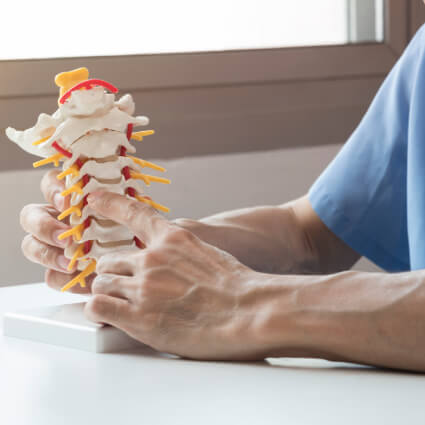
Degenerative disc disease (DDD) is a condition in which the discs between the vertebrae break down over time. These discs act as shock absorbers and allow the spine to move freely. As they lose height and hydration, the space between vertebrae decreases, stress on surrounding joints and nerves increases, and pain follows.
Despite the name, DDD is not a disease in the traditional sense. It’s wear and tear that occurs naturally with age, though it can be accelerated by injury, genetics, lifestyle, or repetitive stress. Many people with DDD find effective relief and maintain an active life with the right approach to care.
How Disc Degeneration Makes Itself Known
DDD can affect different parts of the spine and produce a wide range of symptoms. The most commonly affected areas are the lower back and neck. Symptoms may come and go, with flare-ups following periods of prolonged sitting, bending, or twisting, and easing with movement or walking.
If a nerve is involved, symptoms can extend further, producing radiating pain, numbness, or tingling into the arm, hand, leg, or foot. Many patients have been told their imaging shows significant disc height loss or “bone on bone” changes. That language can feel discouraging, but the degree of degeneration on imaging doesn’t always match the level of pain a person experiences, and it doesn’t determine whether relief is possible.
When Conservative Care Is Worth Pursuing First
If pain is affecting daily function, sleep, or your ability to stay active, that’s the point to seek a proper evaluation. Symptoms that keep returning, progressively worsen, or limit activities you used to do without thinking are a signal that something needs to change in how DDD is being managed.
What Our Patients Say
-
 My arthritic back is virtually pain free. And I have a bad hip that probably should be replaced—but Dr. Shippy’s care has kept me comfortable and active. I’m very grateful.
 -
I had great results after a few months of treatment with Dr. Shippy, including spinal decompression therapy. I would highly recommend his practice.
Targeting What's Driving the Pain Right Now
When a patient comes in with DDD, the focus is on understanding how it's affecting daily life and what specific structures are contributing to their symptoms. Dr. Shippy reviews any existing imaging and performs a thorough physical examination, evaluating spinal movement, joint function, nerve involvement, and posture.
Non-surgical care at Shippy Chiropractic for DDD typically includes spinal decompression to reduce pressure on affected discs and nerves and improve disc hydration, cold laser therapy to manage inflammation in the joints and soft tissues surrounding the degenerated discs, and chiropractic adjustments to improve spinal mobility and distribute load more evenly across the spine.
There is no procedure that reverses disc degeneration, but there is a great deal that can be done to reduce pain, restore function, and slow the condition's progression.
Less Pain, More of What You Want to Do
As symptoms improve, patients commonly return to low-impact activity, get through a workday without discomfort, and sleep more consistently. Periodic maintenance care helps catch early flare-ups and keeps the spine moving well between acute episodes. Many patients who came in expecting to need surgery find that a structured conservative approach was the last treatment they needed.
Your Path to Pain-Free Living Starts Here
If you’ve been living with DDD and haven’t found lasting relief, or if you’re looking for a non-surgical path forward, contact Shippy Chiropractic today to schedule your evaluation.
Call (972) 769-9500 or request an appointment online — same-week appointments available.